Lucerne
Lucerne sits where the Reuss river leaves Lake Lucerne, backed by the peaks of Pilatus and Rigi. The old town, the wooden Chapel Bridge and the intact Musegg wall are compact and walkable, and the mountains are a boat and cogwheel ride away.

Lucerne sits where the Reuss river leaves Lake Lucerne, backed by the peaks of Pilatus and Rigi. The old town, the wooden Chapel Bridge and the intact Musegg wall are compact and walkable, and the mountains are a boat and cogwheel ride away.
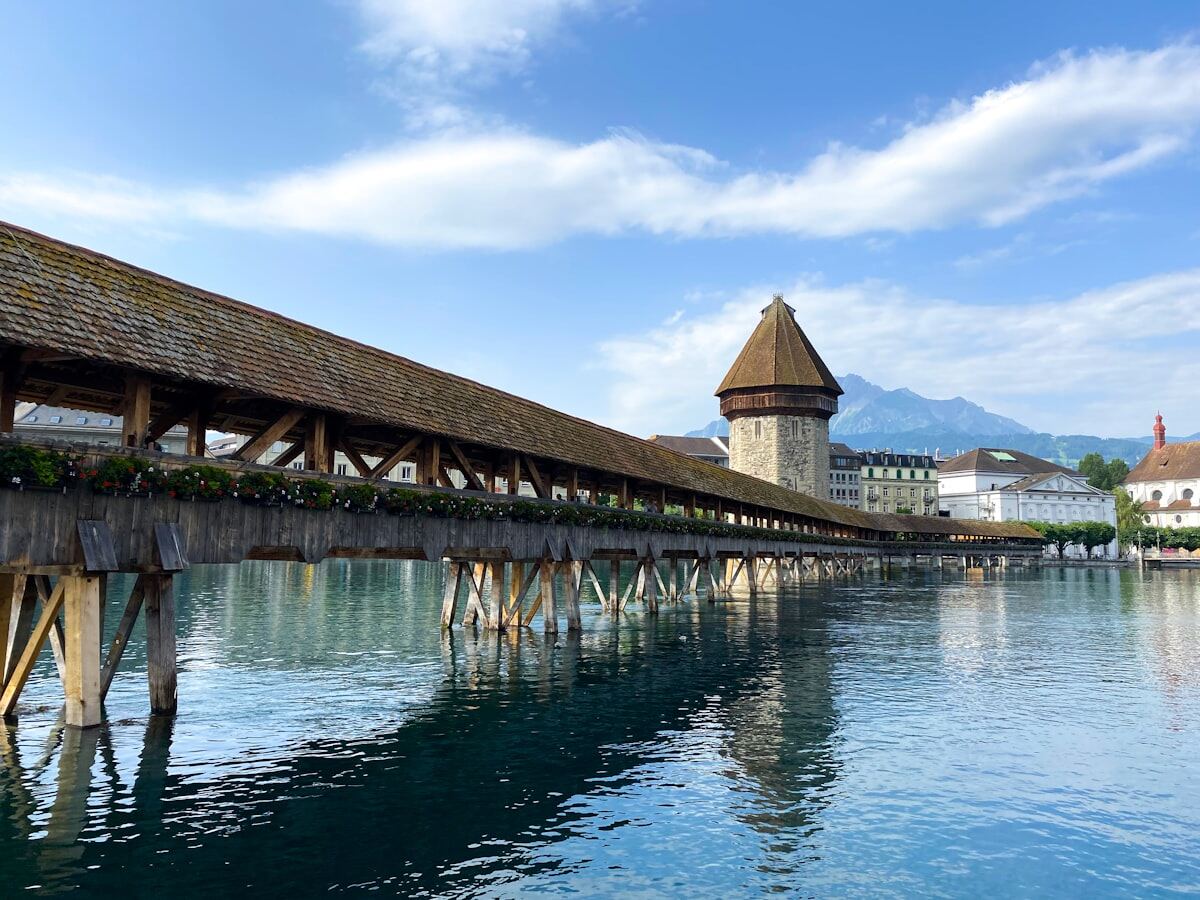
The 14th-century covered wooden footbridge across the Reuss, with its octagonal stone tower, partly rebuilt after a 1993 fire.
Painted house fronts around the Weinmarkt and Kornmarkt squares, and a walkable stretch of the medieval town wall with climbable towers.
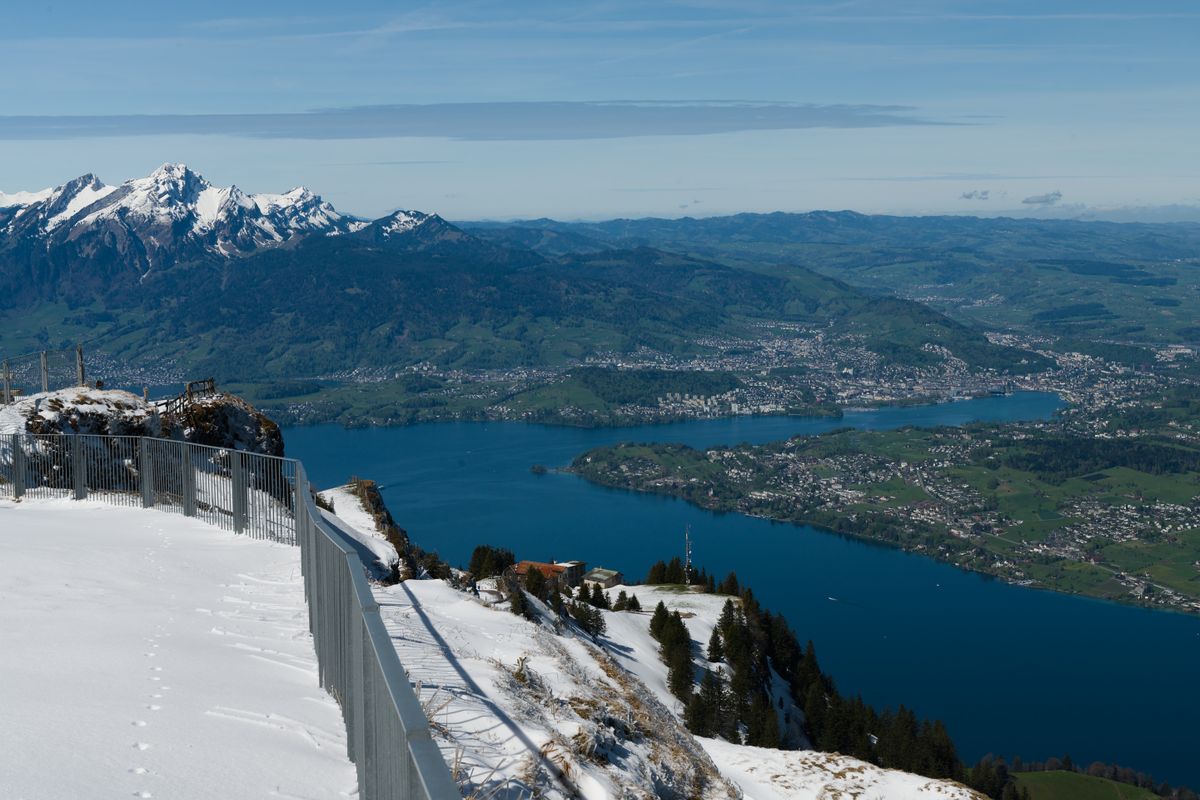
Lake steamers connect to the cogwheel railway up Rigi and, via Alpnachstad, to the steep Pilatus railway, both often done as a round trip from the city.
The old town and bridges are free. The mountain railways, cable cars and lake steamers are priced separately, with combined round-trip tickets and discounts on the Swiss Travel Pass. The Lion Monument and the Swiss Museum of Transport are short trips from the centre. Confirm timetables seasonally.

The old town, the bridges, the wall and the Lion Monument can be walked in half a day.
A round trip over Pilatus or Rigi, combining boat, cogwheel railway and cable car, is the classic full-day excursion. Weather makes or breaks it.
Lucerne is well connected by train and works as a day-trip hub for central Switzerland.
Is the Chapel Bridge original?
Mostly a faithful reconstruction. A 1993 fire destroyed much of the bridge and most of its 17th-century ceiling paintings, and it was rebuilt the following year.
Should I do Pilatus or Rigi?
Pilatus has the steeper railway and more dramatic ridge; Rigi has broader views and more gentle walking. Both are full-day round trips from Lucerne.
Do I need a car?
No. Lucerne is compact and well served by train, bus and lake boat.
How long should I stay?
One night to see the city, two if you want a full mountain excursion day.
Lucerne grew around a monastery and a bridge crossing, and became important as a stop on the Gotthard trade route and a founding member of the Swiss Confederation in the 14th century.
It is now the largest city in central Switzerland and a major tourism centre, known for its lake setting, its medieval core and its music festival.
This page is an independent guide for visitors, covering any tourism body.
